
Copper CNC Machining
Precision CNC milling and turning of custom copper parts for electrical, thermal, and industrial applications.
Common Copper Grades
Explore commonly used copper materials for CNC machining and different application requirements.
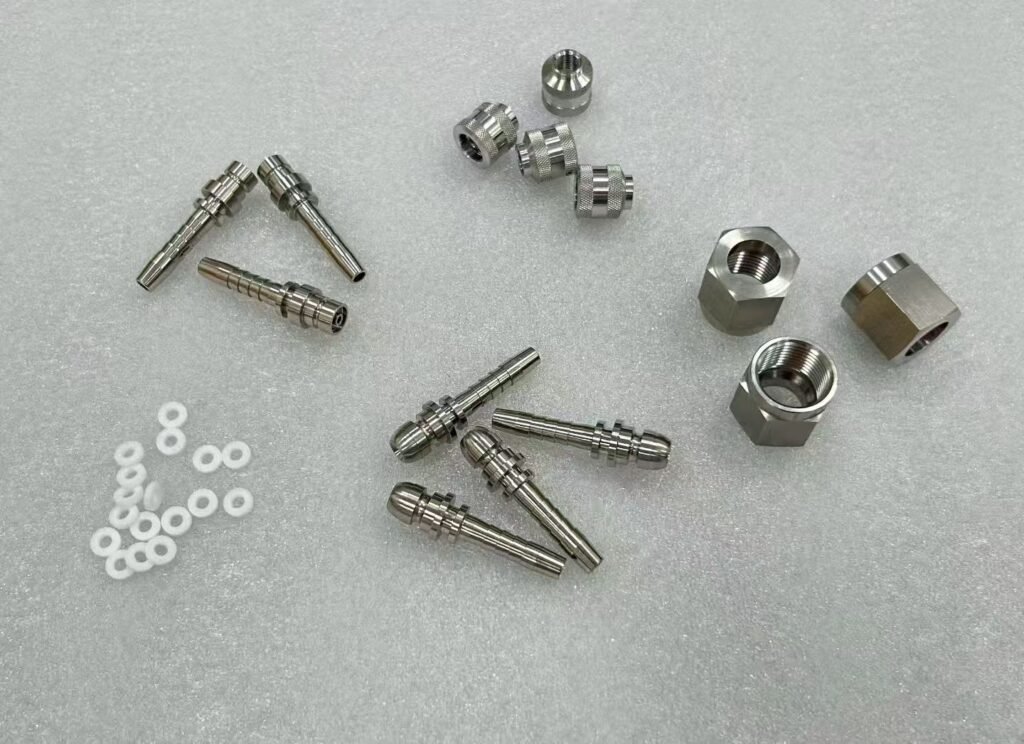
C11000 (ETP Copper)
Standard grade for general electrical & thermal applications.
C10200 (Oxygen-Free)
Low-oxygen content for thermal, electrical & vacuum uses.
C10100 (OFE Copper)
Ultra-high purity for demanding electronic applications.
C14500 (Tellurium Copper)
Enhanced machinability with excellent electrical conductivity.
Copper CNC Machining Capabilities
Custom copper CNC machining for precision electrical and thermal components.
Precision CNC Milling for Copper Parts
Precision CNC Turning for Copper Parts
Holes, Threads & Complex Features
Tolerances Based on Drawing Requirements
Prototyping & Low-Volume Production
Copper CNC Machining Considerations
Key factors for accurate and consistent copper machining.
Chip Control & Tool Adhesion
Control chip formation and built-up edges for stable machining.
Heat & Dimensional Control
Manage cutting heat to maintain dimensional accuracy.
Burr & Edge Control
Minimize burrs on holes, slots, and precision features.
Workholding & Part Stability
Use proper fixturing to minimize deformation during machining.
Surface Finishing Options for Copper
Surface finishes for appearance, oxidation protection, and electrical applications.
As-Machined
Retains the natural copper finish with visible machining marks.
Polishing
Creates a smoother, brighter surface for copper parts.
Tin / Silver Plating
Helps improve oxidation resistance and electrical contact performance.
Bead Blasting
Creates a uniform matte finish for selected copper parts.
Typical CNC-Machined Copper Parts
Custom copper components for electrical, thermal, and industrial applications.
Electrical Busbars & Connectors
Heat Sinks & Thermal Components
RF & Electronic Components
Welding Electrodes & Contacts
Frequently Asked Questions
Common questions about copper CNC machining.
What is the difference between C11000 and C10200 copper?
C11000 is commonly used for electrical applications, while C10200 is oxygen-free copper, preferred where low oxygen content is important.
How do you prevent copper parts from oxidizing?
Suitable surface treatments, such as tin or silver plating, can help reduce oxidation. The best option depends on the application.
Can you machine complex heatsinks or deep slots in copper?
Yes, we can machine complex copper features. Feasibility depends on the part geometry, dimensions, and tolerance requirements.
Do you provide material test reports (MTRs)?
Material test reports may be available upon request, depending on the copper grade and supplier documentation.
Ready to Start Your Copper CNC Machining Project?
Send us your drawings and requirements for a custom copper CNC machining quote.